Web development
How to write a website brief that gets you accurate quotes
A good brief saves weeks and gets comparable quotes. Here is a plain-English template: goals, audience, pages, features, content, budget and timing.
By Zafirox Tech Team · · 4 min read
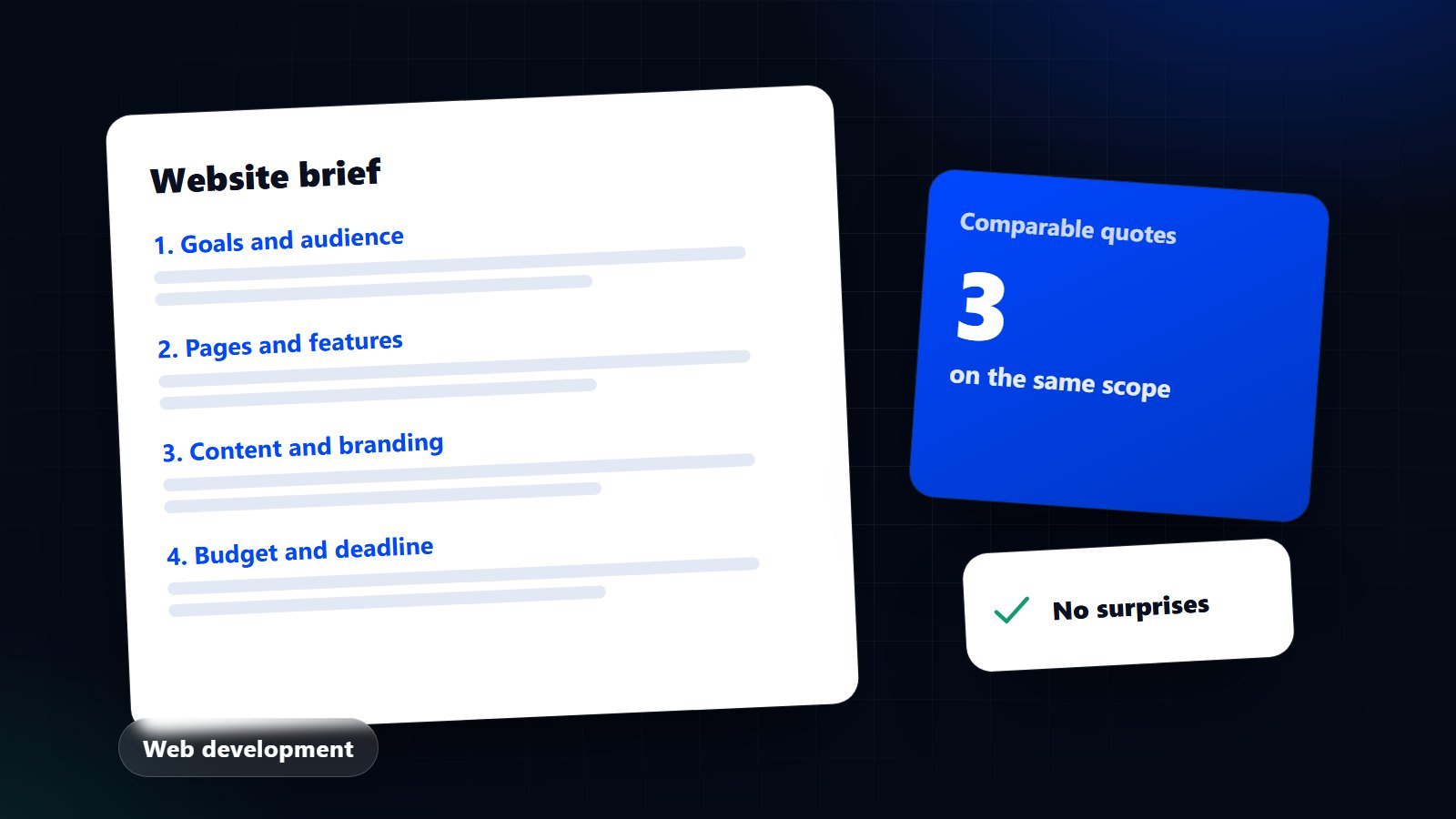
Most disappointing website projects do not fail because of bad code or bad design. They fail because the person paying and the person building understood the job differently. A written brief is the cheapest way to prevent that. It takes an hour or two, it makes every quote more accurate, and it lets you compare agencies on the same footing.
You do not need technical language. If you can explain your business to a new employee, you can write a brief. Use the sections below as a template and answer each in a few sentences.
1. About the business
Say what you sell, who you sell to and where you operate. Include the one or two things that make you different from the competitors a customer might also consider. If you serve both the UK and Pakistan, say so, because it affects currency, payment methods, language and delivery information on the site.
2. Why you need the website
This is the most important section and the one most briefs skip. "We need a new website" is not a goal. These are goals:
- Get more phone calls and quote requests from local customers.
- Sell products online and take payment by card and bank transfer.
- Let patients or clients book appointments without phoning.
- Replace a slow, outdated site that no longer reflects the business.
Pick one main goal and at most two supporting ones. A site built to do everything usually does nothing well.
3. Who the visitors are
Describe your typical customer: their age range if it matters, what they are trying to do on your site, what worries them before they buy, and which device they probably use. If most of your customers arrive from WhatsApp links or Instagram, that means mobile first, and it should shape the design from day one.
4. What the site must contain
List the pages you expect: home, about, services, contact, blog, portfolio, pricing, FAQs. Then list the things a visitor must be able to do, because those become features:
- Fill in an enquiry or quote form.
- Book a time slot or request a callback.
- Buy online, with delivery options and discount codes.
- Log in to see orders, documents or appointments.
- Switch language or currency.
- Click to call, email or message you on WhatsApp.
Mark each item as must have, nice to have or later. That single habit gives an agency room to suggest a phased plan that fits your budget instead of a take-it-or-leave-it price.
5. Sites you like and dislike
Share two or three websites you admire and, just as usefully, one you dislike, with a sentence on why. "Clean and easy to find the phone number" tells a designer far more than "modern". These are for direction, not copying, and a good agency will tell you if an example conflicts with your goals.
6. Content: who provides what
Be honest about what already exists. Do you have a logo in a usable file format, brand colours, product photos, service descriptions, customer testimonials, legal pages? Decide who writes the text and who sources the photography. Late or missing content is the single most common reason a website launches weeks behind schedule, so put a date next to it in the brief.
7. Existing website, domain and accounts
If you already have a website, give the address and say what you want to keep. Tell the agency where the domain is registered and who has the login. A redesign should protect pages that already bring in visitors: ask how old addresses will be redirected so you do not lose that visibility. Our technical SEO checklist for a new website launch explains what that involves.
8. Budget and timing
Many people hold back their budget in case it is used against them. In practice the opposite happens: without a number, an agency has to guess, and a guess is either too high to be useful or too low to be honest. A range is enough. If you are unsure what a realistic range is, read what affects the cost of a business website first.
Give a target launch date and the reason behind it (a campaign, a season, an event). A real deadline changes how a project is planned. An arbitrary one just adds stress.
9. How you will decide
Name who approves the work, how many people will give feedback and how quickly you can respond. Projects slow down when feedback arrives from five people at different times. One decision-maker, plus a short list of reviewers, keeps things moving.
A short brief you can copy
- Business: what we sell, to whom, in which countries.
- Main goal: the one result the website must deliver.
- Audience: who visits and what they want to do.
- Pages and features: must have, nice to have, later.
- References: two sites we like, one we dislike, and why.
- Content: what exists, who writes the rest, by when.
- Current site and accounts: address, domain, hosting, logins.
- Budget range and launch date.
- Decision-maker and reviewers.
What to expect back
A good proposal repeats your goals in its own words, lists what is included and excluded, shows a timeline with milestones and explains the next steps. If a quote arrives as a single price with no breakdown, ask for the detail before comparing it with anything else.
If you would like a quick, no-obligation starting point, our instant quote builder gives you a priced estimate and a written proposal in a few minutes, and you can send us your finished brief through the contact page for a tailored plan.