Web development
WordPress or a custom-built website: which fits your project?
Both can be the right answer. Here is how to choose between a WordPress site and a custom-built application based on what you need the website to do.
By Zafirox Tech Team · · 3 min read
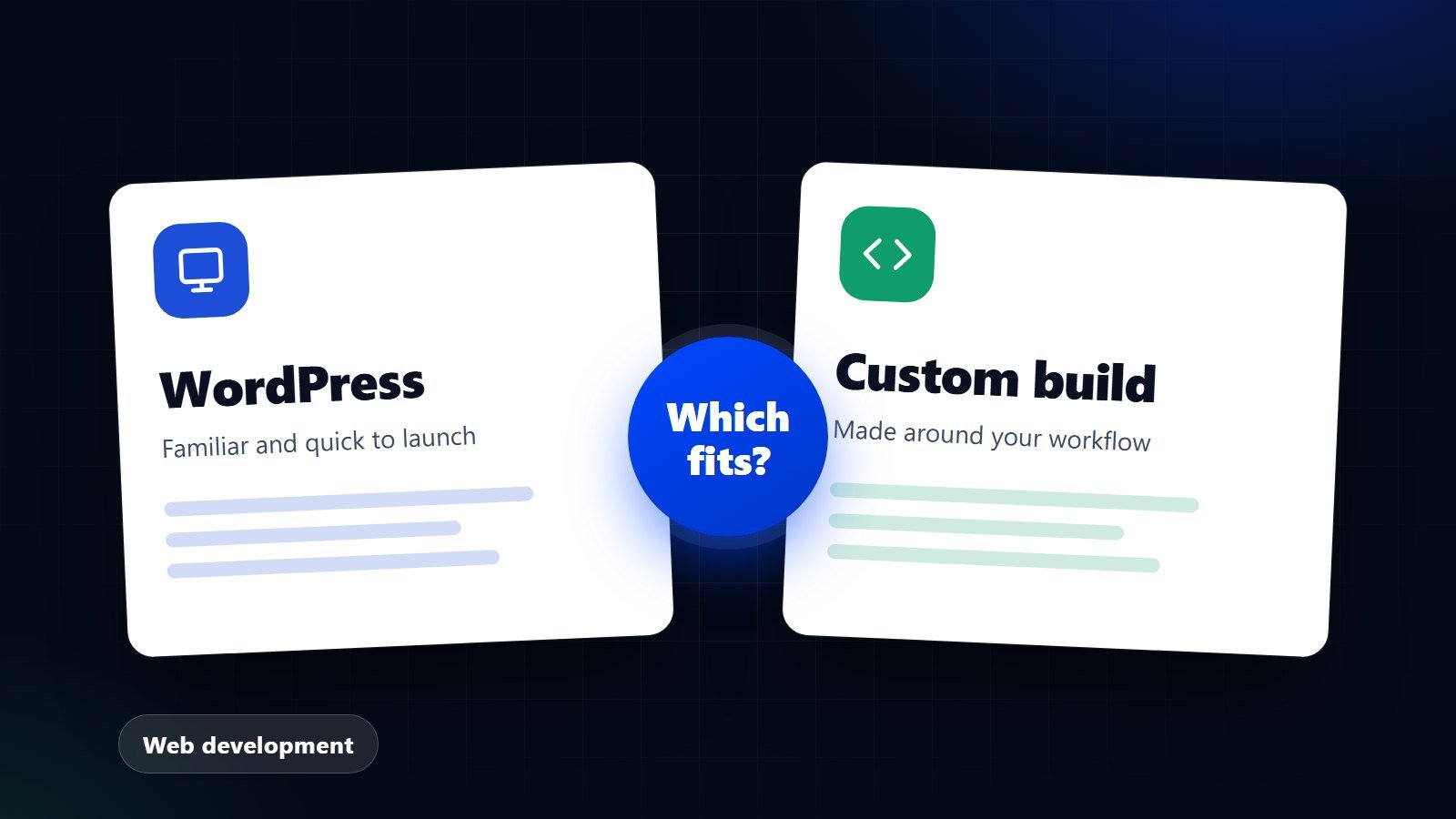
"Should we use WordPress or have something built from scratch?" is one of the questions we hear most. There is no universal answer, and anyone who gives you one without asking about your project is selling, not advising. The right choice depends on what the website needs to do, who will manage it and how much it needs to grow.
When WordPress is a good fit
WordPress is a mature content management system that powers a large share of the web. It suits:
- Brochure and service websites with a handful of page types.
- Blogs and content-led sites where editors publish regularly.
- Projects where a standard feature, such as a contact form, gallery or booking plugin, already does the job.
- Budgets that favour proven building blocks over bespoke work.
A big advantage is familiarity. Many people can edit a WordPress site, and many developers can maintain one, so you are rarely locked in to a single supplier.
When custom development is a better fit
A custom build, for example with a framework such as Laravel, makes sense when the website is really a piece of software. Examples include:
- Customer accounts, dashboards or portals with different permissions.
- Learning platforms, membership systems or booking engines with specific rules.
- Integrations with internal systems, payment providers or other services.
- Data-heavy sites where search, filtering and performance matter.
Here, stacking plugins together can become fragile. Purpose-built code does exactly what you need, nothing more, and is easier to test.
Comparing them honestly
- Upfront cost. WordPress is usually cheaper to launch for standard needs. Custom work costs more at the start because more is designed and written for you.
- Flexibility. Custom is more flexible. WordPress is flexible too, but unusual requirements often mean heavier customisation or plugin compromises.
- Maintenance. WordPress needs regular updates to the core, theme and plugins. A custom application also needs maintenance, but with a smaller, deliberate set of components.
- Security. Neither is automatically safer. Most WordPress problems come from outdated or poorly chosen plugins and weak passwords. Custom code is only as safe as the people who wrote and reviewed it.
- Ownership and handover. Ask who can edit the content and who can change the code. With either option, you should own your content, hosting accounts and source code.
The mistake to avoid
Choosing a platform first and the requirements second. Write down what visitors and staff need to do, then see which approach does it with the least complexity. If a well-configured WordPress site covers it, a custom build is an unnecessary expense. If you find yourself needing a dozen plugins to imitate one workflow, that is a sign you may need custom development.
Questions to ask before deciding
- What are the five most important things a visitor or customer must be able to do?
- Who will update the site, and how often?
- Which other systems must it connect to?
- What will it need to handle in two or three years?
- What is the full cost of ownership, including hosting, updates and support?
We build with WordPress and with custom code, so we have no reason to push one over the other. Read what affects the cost of a business website for the wider budget picture, then explore our website design and development and custom web application services. Tell us what you need and we will recommend the simpler route.