SEO
Keyword research for small businesses, without paid tools
You can find what your customers search for using free tools: Google itself, Search Console and your own enquiries. A step-by-step method.
By Zafirox Tech Team · · 4 min read
Keyword research sounds technical, but the idea is simple: find out the words your customers actually type into Google, then make sure your pages answer them. Paid tools can help at scale. A small business with a few dozen pages can get most of the value from free sources and a bit of thought. Here is a method that works for a plumber, a clinic, a Shopify store or a software firm.
Start with your customers, not a tool
Open a blank document and list:
- Every service or product you sell, in the words you use internally.
- The questions customers ask on the phone, on WhatsApp and by email before they buy.
- The problems that make them contact you in the first place.
- The places you serve: towns, cities and neighbourhoods.
Your own enquiries are a goldmine because they are written by real buyers. Customers often describe the problem ("my boiler keeps losing pressure") while you describe the service ("boiler repair"). You need pages for both.
Understand search intent
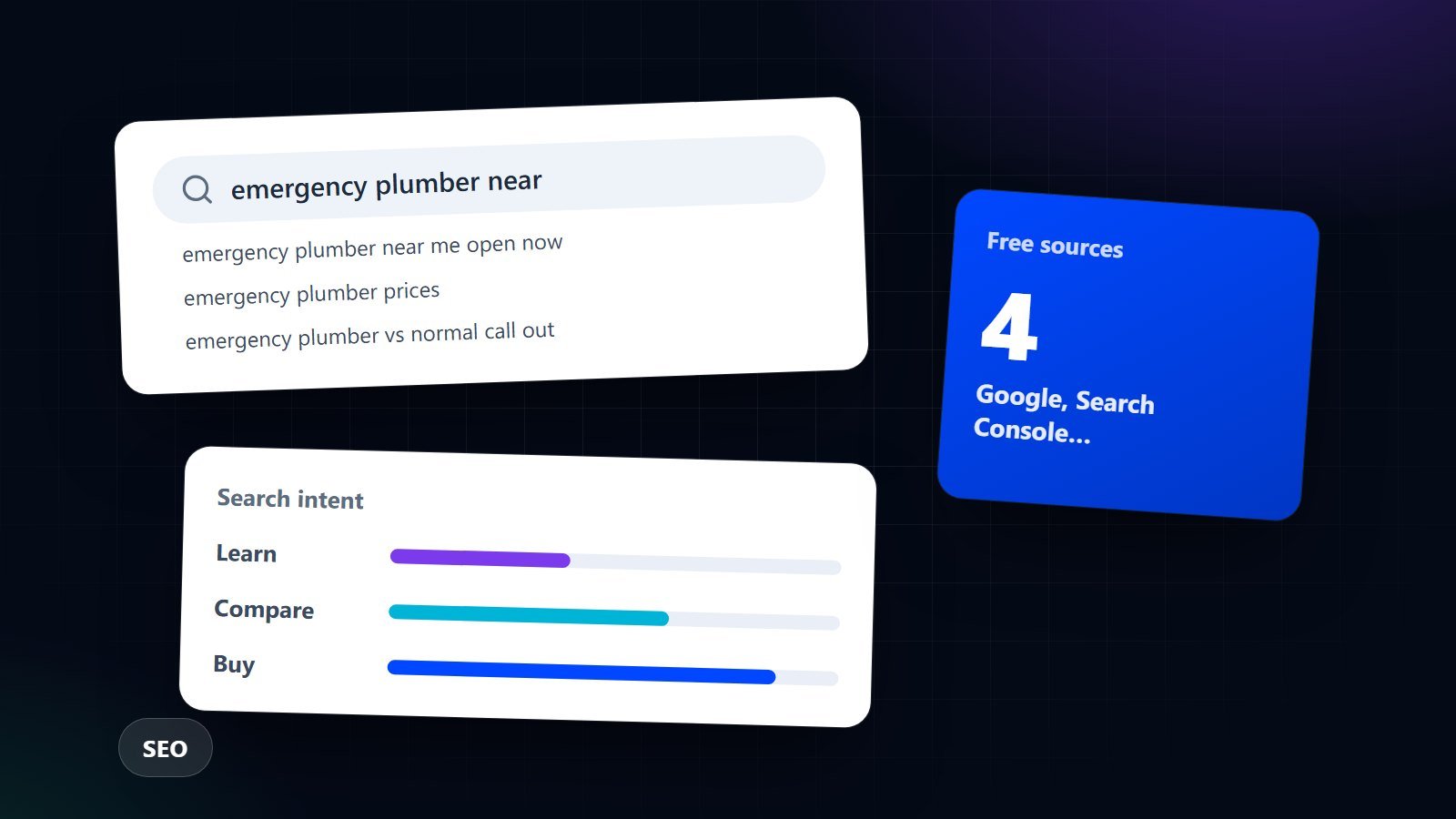
People search for different reasons, and the same word can mean different things. A rough grouping helps you decide what kind of page to create:
- Learning: "how does a dental implant work". Best served by an article or guide.
- Comparing: "shopify vs woocommerce". Best served by a comparison page.
- Ready to act: "web design agency Manchester", "buy [product]". Best served by a service or product page with a clear call to action.
- Finding a place or brand: "[business name] opening hours". Best served by a strong contact page and a Google Business Profile.
If you write a long guide for someone who wants to buy today, or a sales page for someone who wants to learn, the page will disappoint and the ranking will not last. Look at what Google already shows for a phrase: the type of pages in the top results tells you what searchers expect.
Free source 1: Google's own suggestions
Type the start of a phrase into Google and read the suggestions that drop down. Scroll to the bottom of the results page and read "related searches". Look at the "people also ask" boxes. Each is a real pattern of behaviour, collected for you at no cost. Note the ones that match something you can genuinely help with.
Free source 2: Google Search Console
If your site is already verified in Search Console, open the Performance report and look at the Queries tab. It shows the searches that already bring people to your site, with impressions (how often you appeared), clicks and average position. Two groups are especially useful:
- High impressions, few clicks. You appear, but people are not choosing you. Improve the page title and description, or make the page answer the question more clearly.
- Positions roughly 8 to 20. You are close. Improving the content, adding internal links and strengthening the page often moves these further than writing something new.
Free source 3: Google Keyword Planner
Keyword Planner is part of Google Ads and can be used without running ads, although you need an account. It gives ranges for how often a phrase is searched, not exact numbers, and it is better for comparing ideas than for precise forecasting. Treat volume as a rough guide. A phrase searched a few dozen times a month can be far more valuable than one searched thousands of times if the people searching are ready to hire you.
Free source 4: your competitors' pages
Search for your main service and read the headings and page titles of the businesses that rank. You are not copying them. You are looking for subjects they cover that you do not, and gaps they leave open: a price guide, a clear process, local detail, an honest comparison.
Turn the list into a plan
- Group similar phrases together. "Cheap website design", "affordable web design" and "low-cost website" usually belong on the same page, not three.
- Give each group one page and one main phrase, with a few variations used naturally.
- Put the phrase where it matters: the page title, the main heading, the first paragraph, the web address and a few subheadings. Then write for people.
- Add the location when it is relevant. If you serve several towns, give each a page with genuine local information, not the same text with the name swapped.
- Link related pages to each other with descriptive link text, for example from a guide to the matching service.
Mistakes to avoid
- Stuffing. Repeating a phrase until the text reads oddly harms readers and does not help ranking.
- Chasing only high-volume terms. Specific phrases convert better and are easier to win.
- Writing for tools. A page that helps one real person do one real thing will outperform a page built around a score.
- Forgetting to review. Check Search Console every month or two and update pages as you learn.
Rankings take time, as we explain in how long SEO takes to work. If you would like help turning your own list into a content plan, our SEO service is built around exactly this process.